
CECL - Current Expected Credit Losses: Past, Present & Future
About This Course
The guidance requires institutions to estimate an expected lifetime credit loss on financial assets ranging from short-term trade accounts receivable to long-term financings measured at amortized cost. While estimating lifetime losses, all available and relevant information about past events, current conditions, and reasonable and supportable forecasts should be considered.
Unlike the incurred loss models in existing U.S. GAAP, the CECL model does not specify a threshold for recognizing an impairment allowance. Rather, an entity will recognize its estimate of expected credit losses for financial assets from the day they go on the balance sheet (or an off-balance sheet arrangement is entered into). Credit impairment will be recognized as an allowance — or contra-asset — to the amortized cost basis of the asset
Specific Areas Covered:
- Overview of CECL
- Impact of CECL Implementation
- CECL Post-Implementation
- CECL Financial Reporting
*This program does NOT qualify, nor meet the National Standard for NASBA accreditation.
Your Instructor
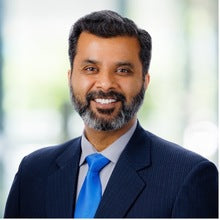
Manish Garg is a Director in Stout’s Accounting & Reporting Advisory practice. He has over 20 years of experience in a variety of accounting and financial leadership roles, including controllership, FP&A, project management, technical accounting, and transaction advisory. He brings a solid technical advisory background, including advising on new and complex transactions, implementing new accounting guidance, and assessing and analyzing accounting and reporting impacts of financial statements. Mr. Garg advises both publicly traded and privately owned companies on compliance with U.S. GAAP and IFRS. Mr. Garg’s extensive expertise lies in the financial services industry, specifically in the areas of business combinations, financial instruments, derivatives and hedging, variable interest entities, tax credits, credit losses, and more. Prior to joining Stout, Mr. Garg was a Vice President at Huntington Bank, where he provided financial accounting and reporting advisory to Huntington’s various businesses. He had also held senior positions in various departments of HSBC and led a global finance transformation project at American Express.
This course is covered under team memberships.
See Team Memberships