
Strategic Components of Executive Leadership
About This Course
Most organizations have strong operational leaders. Many ascended to their leadership roles from the ranks of managers and supervisors and are adept in their operational abilities. They tend to work to maintain the status quo. Most lack the know-how, experience, and confidence to tackle what one of my college professors used to call wicked problems. These problems can’t be solved with a single solution or diminutive actions. Their causes seem incomprehensible, and their solutions are daunting. Wicked problems require complex remedies and strategic analysis to overcome the challenges. Often these problems mean that institutions need to completely transform how they do business. Leaders that challenge the prevailing view, which can act on big and small picture items at the same time, can change course as needed. They need to lead with inquiry, engagement, and advocacy while operating from a deeply held humility and respect for others. Operational pressures can certainly be the preoccupation of most leaders’ attention. This course will help you take the steps necessary to move towards greater strategic leadership. It will focus on best practices and practical strategies that will guide executive leaders in incorporating strategic leadership components. This material will help executive leaders expand their strategic impact on the organization and drive strategic thinking throughout their organizations.
Topics covered in this session
Overview
- Executive Leadership and Strategic Thinking
- Strategic Goals and Objectives
- Organizational Culture – Cultivating a Transformative Environment
Strategic Leadership Components
- Interpretation and Prioritization
- Critical Thinking and Decision Making
- Delegation and Distribution of Responsibility
- Comprehensive Communication
- Driving Innovation and Creativity
- Develop All as Leaders
- Recognize Leadership Development as an Ongoing Practice
Change Management
- Challenging the Status Quo
- Defining the Change
- Communicating the Change
- Implementing the Change
- Creating an Agile Organization
Big Picture Thinking
- Mission and Vision
- Visualizing the Future
- Foresight and Anticipation
Who Should Attend:
- Supervisors
- Branch Managers
- Team leaders
- Human resource managers
- Vice presidents
- Presidents, CEOs, CFOs
- Controllers
- Banking Officers/Directors
- Customer Experience
*This program does NOT qualify, nor meet the National Standard for NASBA accreditation.
Your Instructor
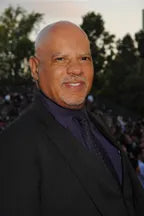
Owner of Sea Ventures Consulting
- Through his workshops, strategy sessions, and keynote addresses, he focuses on helping organizations that are stuck in the way it has always been done, thinking without ever achieving true satisfaction, to transform
- By producing an organizational culture that creates a contagious leadership environment, helps organizations to achieve maximum performance, increase employee retention, and heighten employee engagement
- More than 20 years of senior leadership, coaching, training, and development experience
- Mentor in business, marketing, sales, human resources, entrepreneurship, and leadership in public agencies and community organizations
- Facilitated management and employee feedback sessions
- Coaches leaders and managers in public and private industries around team building and culture development
- Developed, delivered, and evaluated a variety of training seminars, including, customer service, change management, strategic planning, leadership development, and public speaking
- Provided leadership training to Leadership Pasadena, a leadership program that empowers, inspires, and connects leaders who strengthen a diverse community
CPE & Accreditation
This course qualifies for 1.0 SHRM, 1.0 HR Certification Institute. Your certificate and transcript are available immediately upon completion.
View accreditation details Hide accreditation details
SHRM (Society for Human Resource Management)
BankersHub/Noggin Guru Inc. is recognized by SHRM to offer Professional Development Credits (PDCs) for the SHRM-CPSM or SHRM-SCPSM. This program is valid for the PDC(s) listed to the right of this page for the SHRM-CP or SHRM-SCP.
Requesting CE:
Upon completion of this course, please email
creditrequest@nogginguru.com
to obtain a CE certificate.
HR Certification Institute- General
This program has been pre-approved for the general recertification credit(s) listed to the right on this page. Credits awarded can be used toward the aPHR®, aPHRi(TM), PHR®, PHRca®, SPHR®, GPHR®, PHRi(TM), or SPHRi(TM) recertification through the HR Certification Institute® (HRCI®). For more information about certification or recertification, please visit the HR Certification Institute website at www.hrci.org.
Requesting CE:
Upon completion of this course, please email
creditrequest@nogginguru.com
to obtain a CE certificate.
This course is covered under team memberships.
See Team Memberships