
Top 10 Cs of Cannabis Compliance
About This Course
Ready or not, cannabis banking is here to stay. Social stigmas have changed, political winds are shifting, and tax coffers are burgeoning. Financial institutions are taking note, and eyeing entirely new types of profitable banking relationships.How can banks and credit unions enter this unchartered (and still federally illegal) territory? Can it be done in a way that keeps board members, shareholders, customers, and employees happy? More importantly, can it be done in a way that keeps regulators and examiners happy?! (After all, if they aren’t happy, nobody will be.)Yes. It is certainly a balancing act – one that must be handled with eyes wide open and with much planning but it can be done.
First, you need to get an idea of what you are even dealing with before you can move into real planning and implementation Next, just how deeply will you engage in the cannabis banking world? Are you only going to open deposit accounts? What about lending? It is one thing to bank a cannabis deposit account, but risks compound if you decide to extend credit to a cannabis company. What if they get shut down by the State? What sort of collateral (another “C”!) are you prepared to repossess? Weed? Agricultural land growing weed? Commercial real estate selling weed?
Topics covered in this course
- Cannabis: What exactly are we talking about? Marijuana; hemp, CBD? What is the difference, anyway?
- Compliance: With what, exactly? Federal, State, Local?
- Convictions: Will your Board, management, employees, and customers accept your bank’s involvement in the cannabis industry?
- Cole Memos: Both of them, and what they mean to you
- Cash: In all its smelly (or not?), voluminous, AML-related glory
- CTRs and SARs: Special considerations
- Customers: You say you don’t bank cannabis customers yet?
- Cards: Surprising compliance traps when it comes to debit / ATM cards and cannabis
- Cost: Yours and theirs – more than monetary
- Controls: From risk assessments to transparency and daily oversight – who does what, when, and how?
- (Bonus!) Crystal ball: Is Congress going to do anything about the cannabis conundrum?
Your Instructor
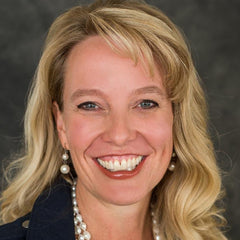
Rebekah is the owner of Elucidate LLC, a compliance training and consulting company. Elucidate means to "make clear, explain, throw light upon", and describes Rebekah's desire to illuminate the complexities of compliance with passion and fun. She's created and produced a TRID music video parody and several Compliance Breakout escape rooms, which she frequently provides at state banking compliance conferences. She is an accomplished speaker and regularly provides webinars through BOL and Compliance Resource. Rebekah is currently serving as the VP Director of Compliance for a $6 Billion community bank in Montana. She began her career in 1995 at a private lending company, but soon settled into banking, where she's covered nearly all of it - customer service and teller work, loan processing and review, and security and business continuity. She now oversees CRA, BSA and all aspects of compliance as a senior leader. She has successfully navigated numerous FDIC Compliance, CRA, and BSA Exams. Rebekah has a bachelor's degree in Organizational Leadership from Chapman University (Magna cum Laude), attended the American Bankers Association National Compliance School in 2003, and has held her Certified Regulatory Compliance Manager designation since 2006.
CPE & Accreditation
This course qualifies for 3.4 CPE/ NASBA. Your certificate and transcript are available immediately upon completion.
View accreditation details Hide accreditation details
CPE/NASBA - QAS Self Study
Noggin Guru, Inc. dba Lorman Education Services and BankersHub is registered with the National Association of State Boards of Accountancy (NASBA) as a sponsor of continuing professional education on the National Registry of CPE Sponsors. State boards of accountancy have final authority on the acceptance of individual courses for CPE credit. Complaints regarding registered sponsors may be submitted to the National Registry of CPE Sponsors through its website: www.nasbaregistry.org.
For more information regarding administrative policies such as complaint and refund, please contact our offices at 866-352-9539.
Please note: You must attend at least 50 minutes to obtain credit. Final CPE approval belongs with each state's regulatory board. Credit is based on a 50-minute credit hour.
For more detailed information about the course, including the outline, content, and objectives, please refer to the 'Description' tab on this webpage.
Field Of Study: Specialized Knowledge
Prerequisite: Basic knowledge of the banking industry, business, or law
Level of Knowledge: Intermediate
Advanced Preparation: None
Delivery Method: QAS Self Study
Requesting CE:
Upon completion of this course, please email
creditrequest@nogginguru.com
to obtain a CE certificate.
This course is covered under team memberships.
See Team Memberships